
Planting lisianthus in the field
A cold snap, a terrible sinus infection and a dog that ate a rope toy and almost didn’t make it.
For a minute, it felt like everything was working against me getting the lisianthus in the ground. A few weeks later than planned, we made it.

With all that made it through germination to seedling, I only needed 2 rows. The 3rd will stay covered and weeded, left to build soil for next year.
Still undecided on the trial between soil blocks and air prune trays. Both have their place.
The air prune trays dried out faster and required more effort to pop the seedlings out of (I know, they make tools for that). The roots held tightly to each cell, nearly root bound by the time of transplant.
The soil blocks stayed wetter than I would have liked at times but the root development was impressive. More of a dense mat, spreading outward rather than circling. Separating them was less delicate, using tongs to pull them apart. A bit rough even. I wasn’t sure how they’d handle it but they’ve settled in just fine.
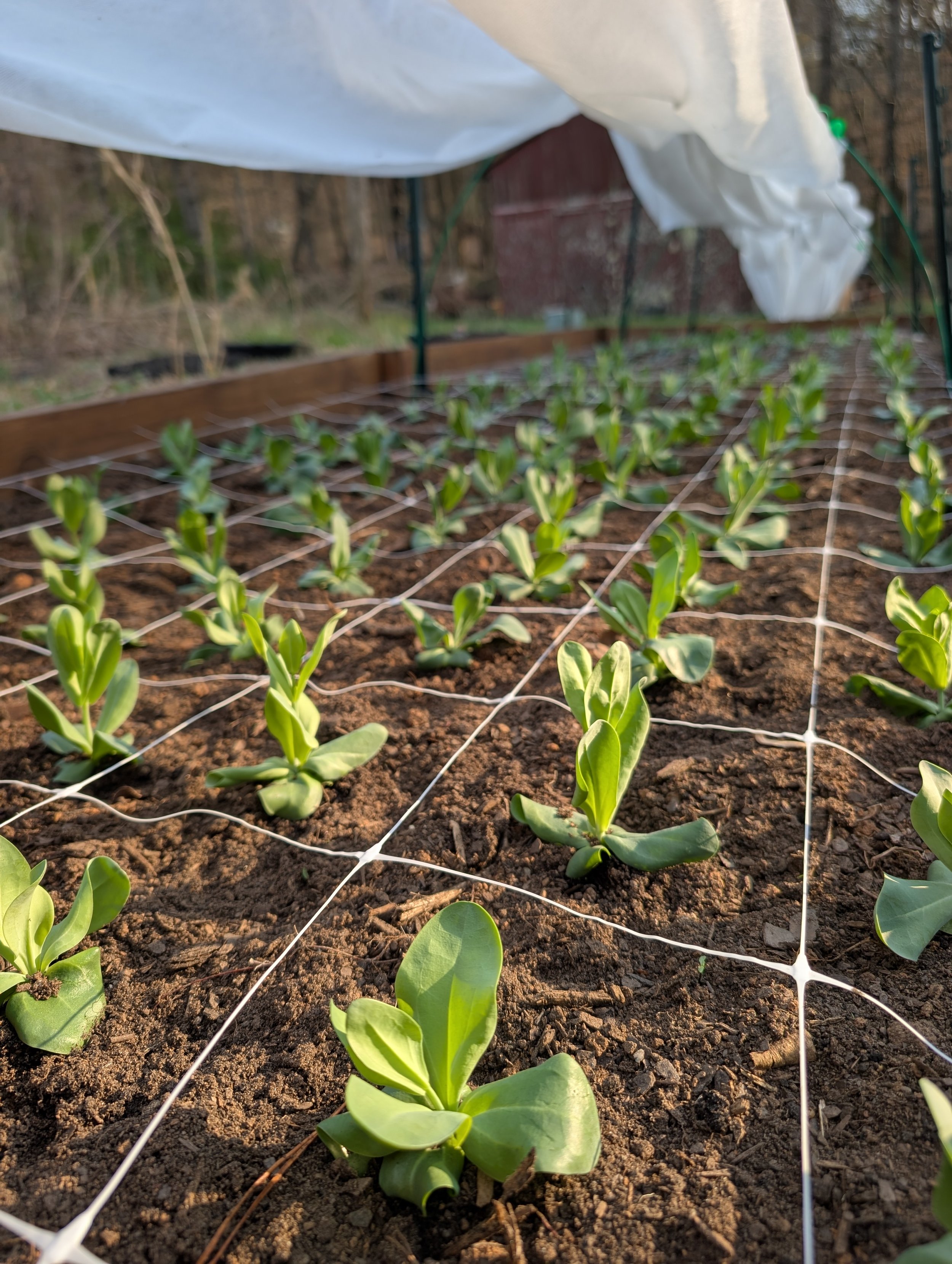
IN THE GROUND
I thought the hard part was over. It’s only just begun.
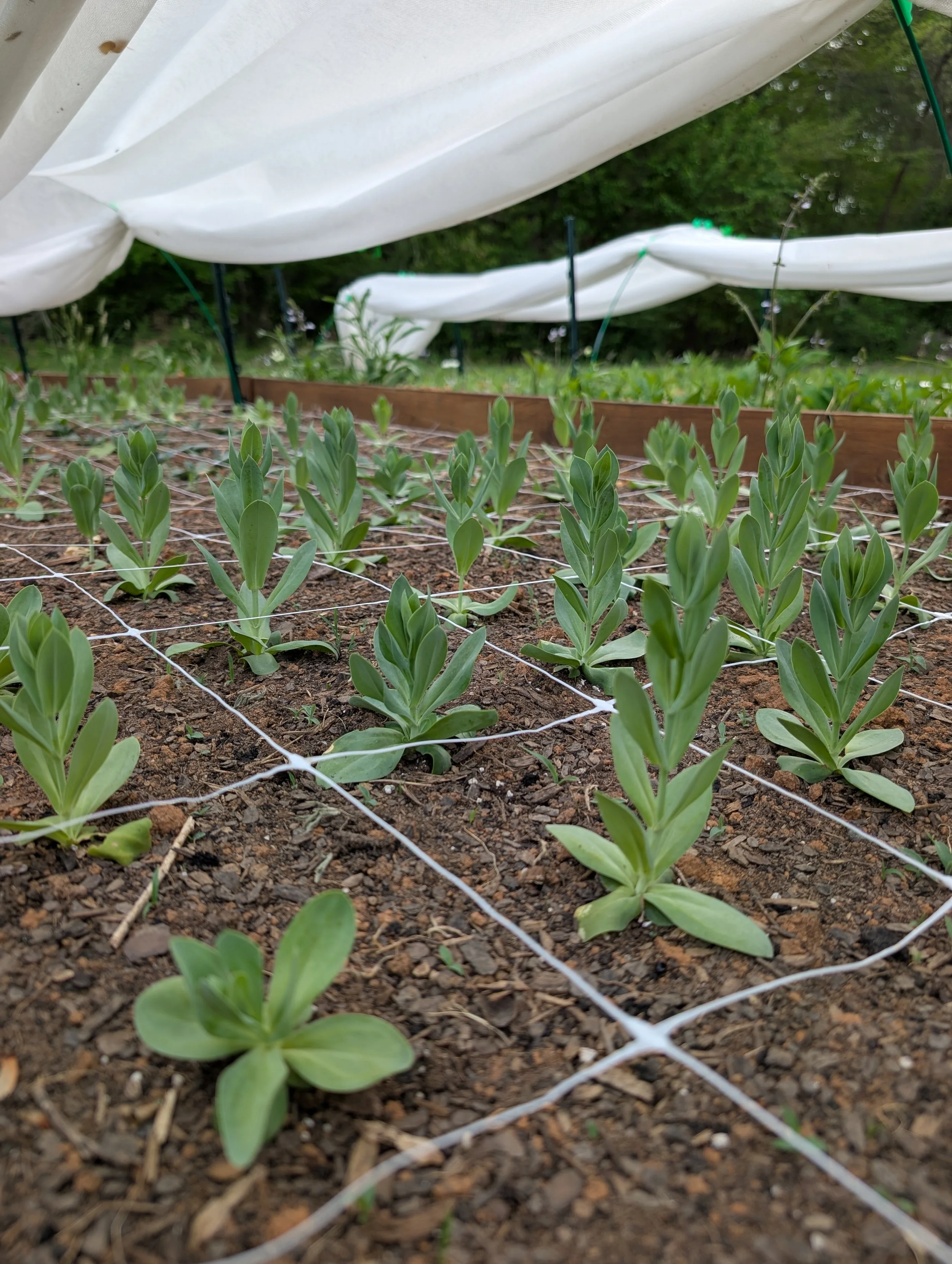
The rows stayed covered at night with a light to medium frost cloth for the first week or 2. Vented in the mornings. Watered from overhead to help everything settle into the soil.
At first, everything looked steady. Promising even. Then the weather shifted. A dusting of snow one week. Mid-80s the next. No doubt contributing to the uneven and unpredictable growth.
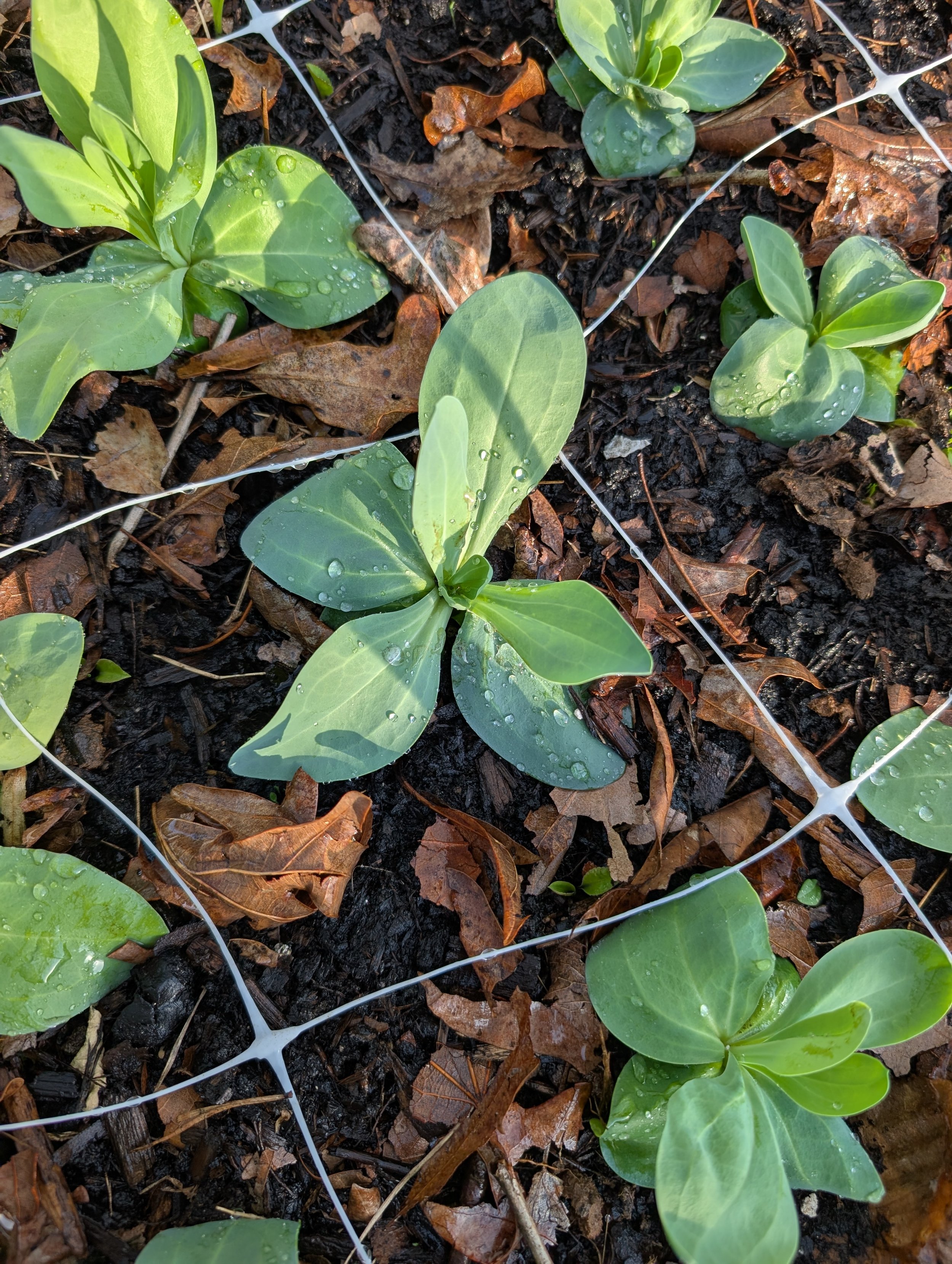
CHALLENGES
WEEK 1
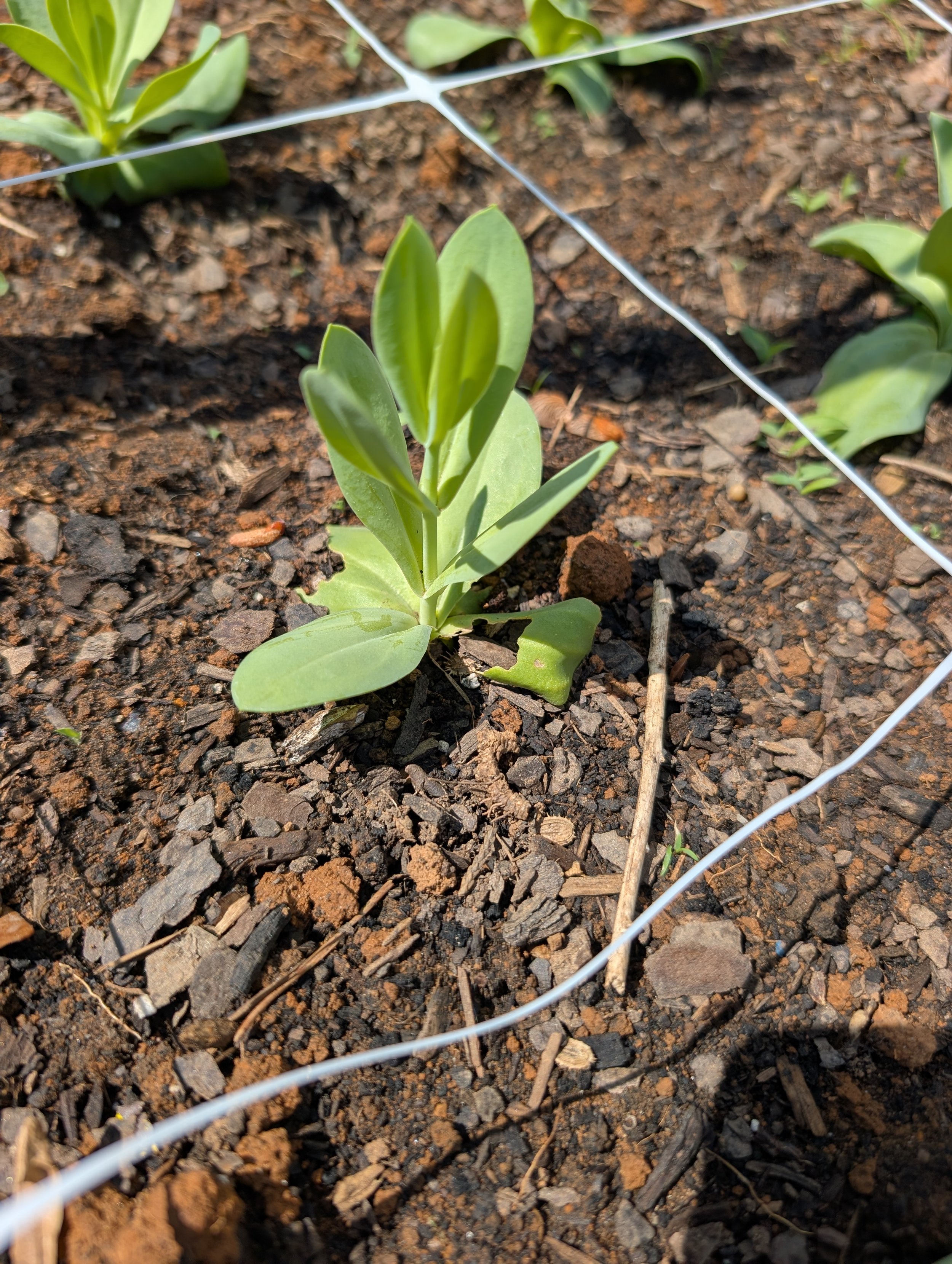
Leaf munchers. Caterpillars. Maybe cutworms too. I tend to lean toward a live-and-let-be approach but they were moving quickly through the lower leaves and in a few cases, cutting stems clean off. A light spray of Bacillus thuringiensis and the munching stopped.
WEEK 4
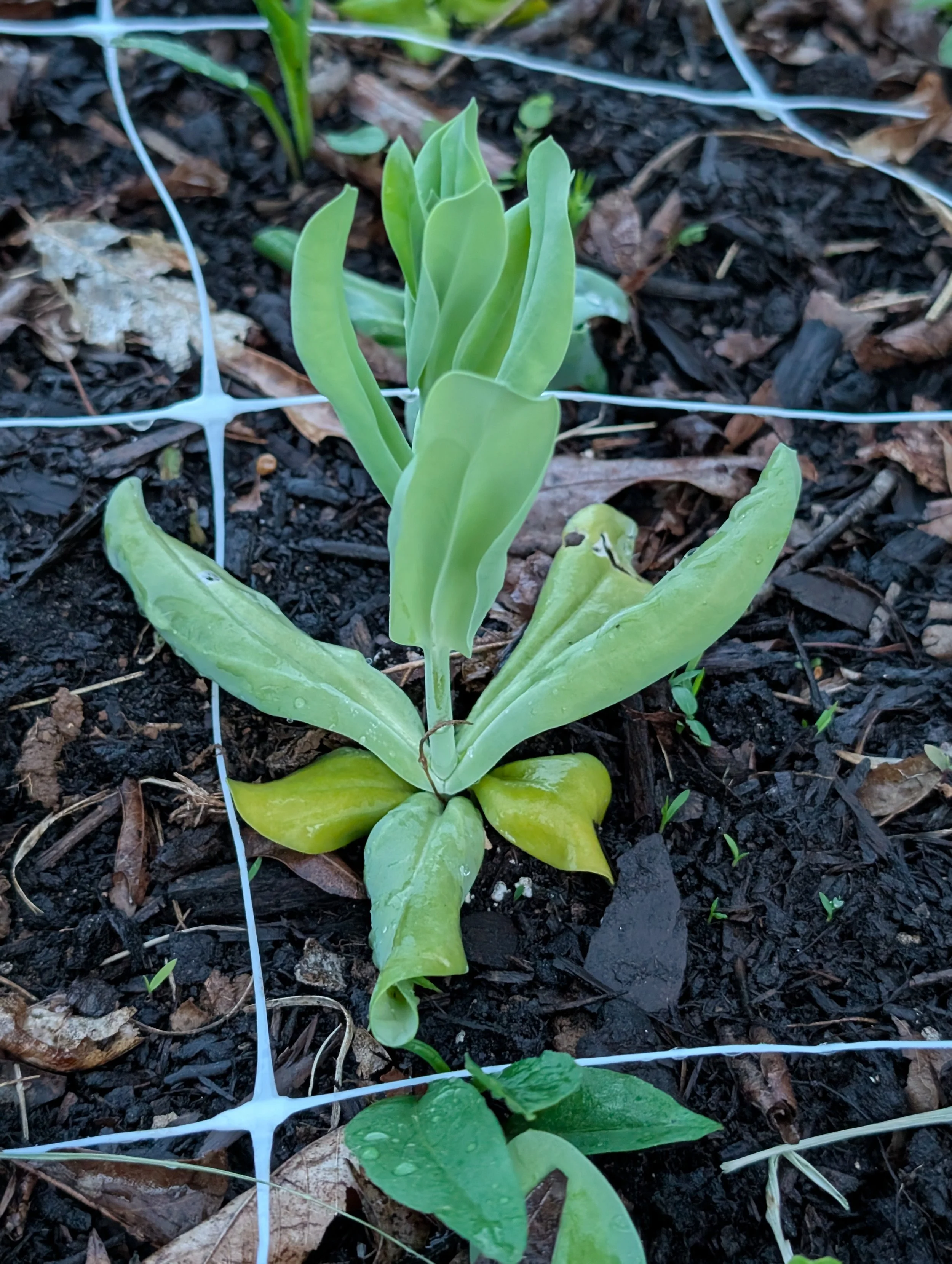
Something else. Yellowing leaves. Uneven growth in certain patches. Overwatering? Heat stress? Crown rot? Nitrogen deficiency?
Naturally, my mind has flooded (the irony) with panic and worst-case-scenarios. Crown rot. Fusarium. A moisture meter put me in check. The soil doesn’t need more water. Despite the yellowing, the plants affected remain upright and firm. Still growing. It’s mostly isolated to the newer bed, where sheet mulching hasn’t fully broken down. My guess is it’s pulling nitrogen as it finishes.
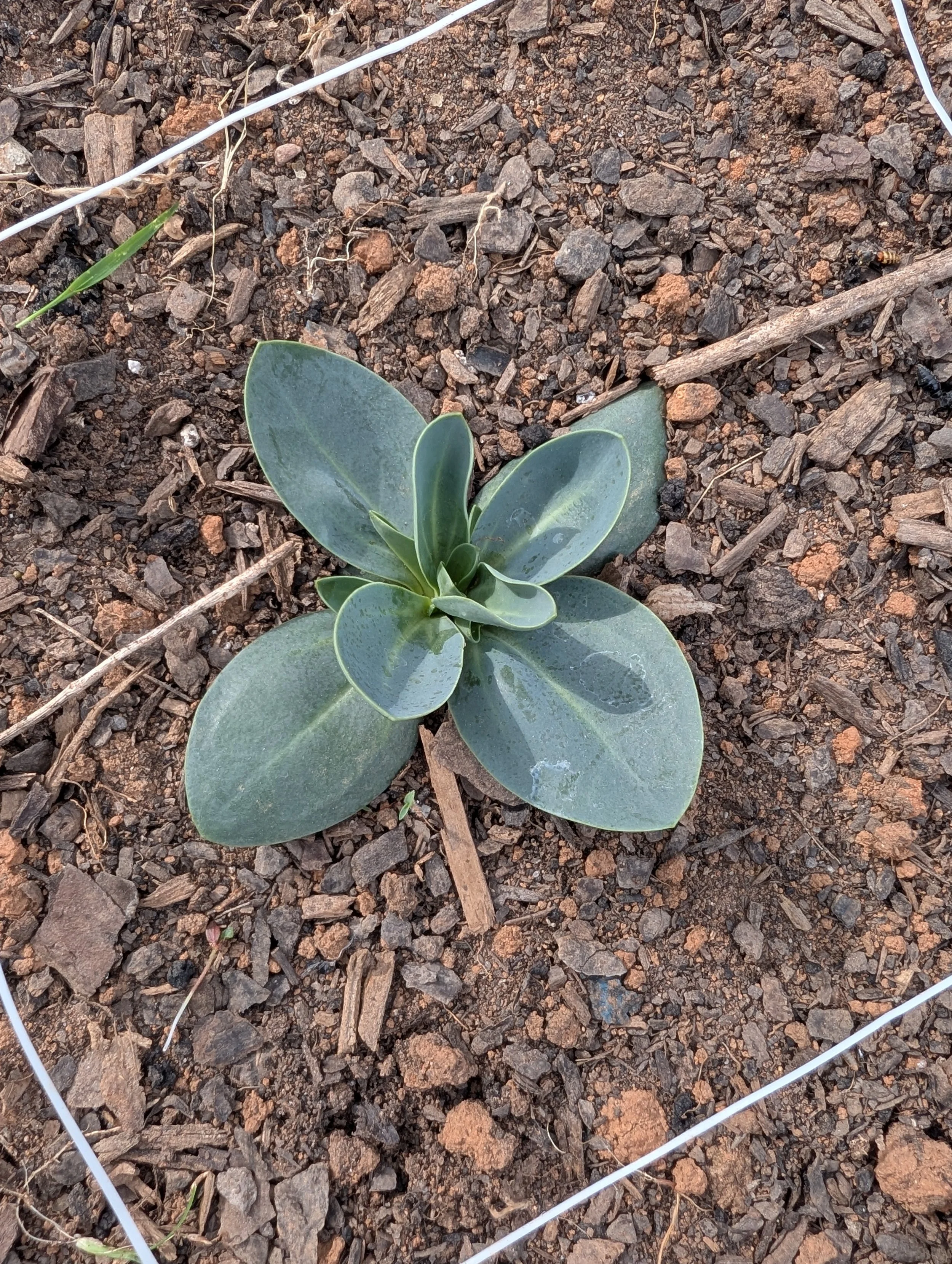
In the other bed, rosetting (the dreaded squat pile of leaves). Seemingly variety specific.
For now, I’ve backed off watering and started feeding with fish emulsion to see how they respond.
Even so, there are plenty of strong healthy plants that I trust will carry through to bloom just fine.
Till next time,
- C